Revenue & Performance
What's the average close rate for an HVAC tech?
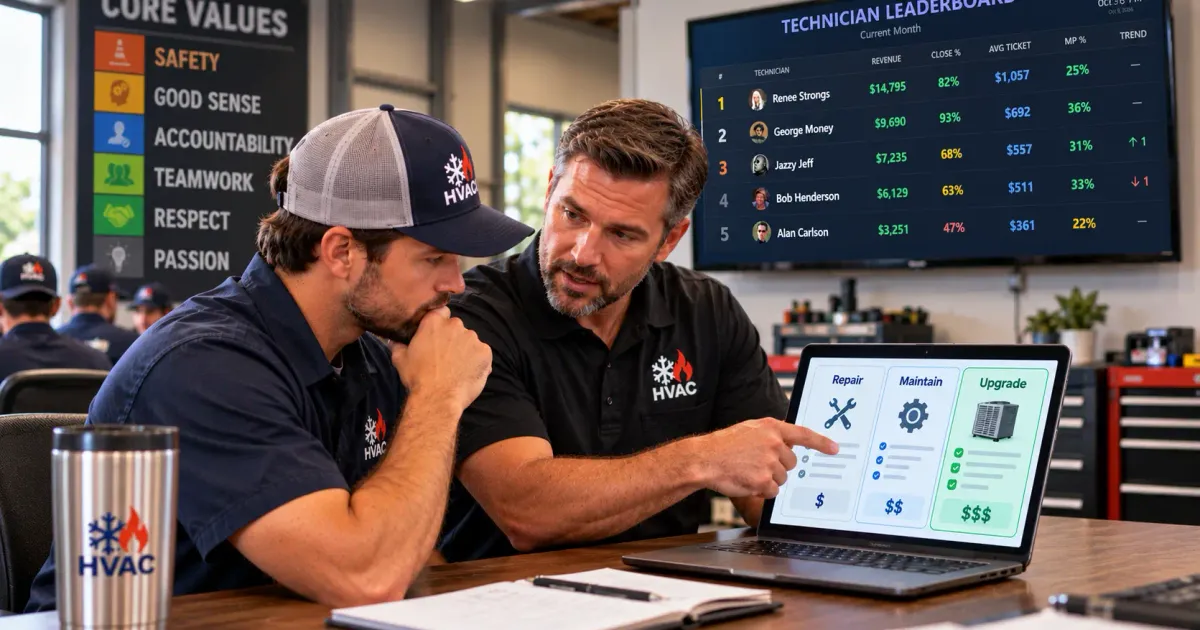
No single average close rate works for every HVAC shop. A useful comparison starts with the calls your techs run and who handles system sales. Compare techs with similar duties, then review their full KTI. Use revenue per truck to check overall productivity, rather than judging the shop by close rate alone.
Why one industry average does not tell you much
Published averages cannot tell you whether another shop assigns work the same way you do. We have no verified benchmark figures to share here. Start with your own calls ran and calls sold for each tech.
Some shops have service techs sell replacement systems. Others send a dedicated comfort advisor to handle those sales. Some use both methods.
Those choices change what a tech gets the chance to sell. They also change who gets credit for the sale. Compare techs with the same duties before deciding who needs training.
Your shop's overall close rate can also hide differences between techs. Review each tech's KTI, not just the shop total. A tech closing below coworkers on similar calls needs a ride-along, not a lecture.
Keep the close rate definitions separate
Call-to-close rate compares jobs sold with all calls ran. Presentation close rate compares jobs sold with the calls where the tech presented an offer. They answer different questions.
A presentation close rate leaves out calls without an offer. That can make the result look better without showing whether the tech missed a sales opportunity. Review those calls before praising the higher rate.
For your KTI, write down what counts as a call ran and a call sold. Track presentation close rate separately if you use it. Have your coach review the rules before comparing techs.
System sales and season affect average ticket
Average ticket needs the same care. A service tech who gets credit for system sales has a different average ticket from one who only sells repairs. That difference does not prove better service work.
Check how your shop records sales handed to a comfort advisor. Review who gets the revenue credit before comparing average tickets. Ask your coach to help keep that rule consistent across reports.
Season changes the work, too. Peak demand periods can produce higher average tickets than periods filled mostly with tune-ups. That can happen regardless of who handles system sales.
Compare average ticket alongside the types of calls completed. A lower ticket during a tune-up-heavy period does not, by itself, show a training problem. Review the tech's KTI before choosing what to coach.
Use revenue per truck to check overall productivity
Team SPG recommends revenue per truck for a broader view of shop productivity. Include all field trucks, including install trucks and those assigned to sales or service.
For a monthly view, divide that month's total revenue by the number of field trucks. Keep the reporting period and truck-counting rules consistent. Bring those rules to your coach if trucks change duties during the month.
Your revenue and truck count are not provided here. Pull both before setting a goal with your coach. Do not replace tech-level KTIs with this shop-level measure.
What to do this week
- Pull each tech's KTI. Review calls ran and calls sold for the same period. Check which techs handle system sales before comparing close rates.
- Calculate revenue per truck. Use total revenue and all field trucks for the same month. Review the result with your coach before setting a target.
- Schedule a ride-along. Choose a tech whose close rate trails coworkers on similar calls. Pick one skill to coach, then check that tech's close rate after training.

Related questions
What is a good close rate for an HVAC technician?
Use your shop's results from techs running similar calls with the same sales duties. Review their full KTI before setting a close rate goal.
What is the difference between call-to-close and presentation close rate?
Call-to-close includes all calls ran. Presentation close rate includes only calls where an offer was presented. Keep those measures separate in your KTI review.
Why is my HVAC close rate dropping?
Check whether call types or system sales duties changed before assuming the tech's work got worse. If those stayed consistent, use a ride-along to find what needs coaching.
Should I focus on average ticket or revenue per truck?
Use revenue per truck to check overall productivity across all field trucks. Keep average ticket in your tech reviews, but account for system sales assignments and seasonal call changes.