
Revenue & Performance
Why do some HVAC techs close more calls than others?
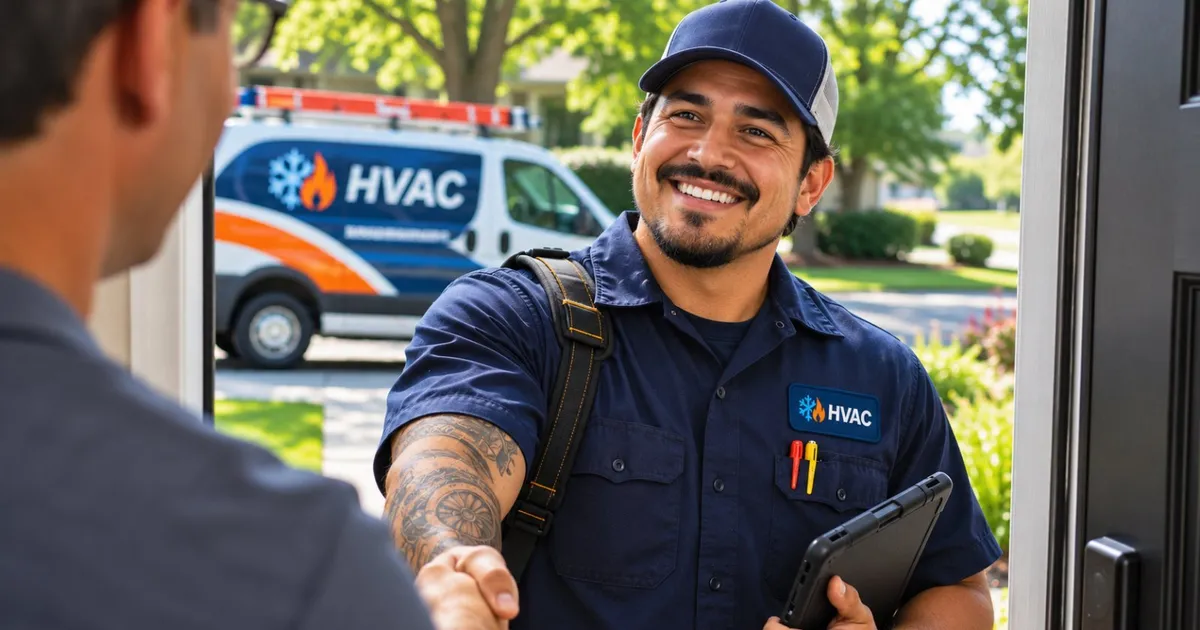
At coached HVAC shops, the bottom quarter of techs close 52.6% of their calls or less. The top quarter close 83.7% or more. They run the same kinds of calls for the same kinds of customers. The difference is not talent. Top techs follow the same steps, in the same order, on every call.
That is good news for an owner. Talent is hard to hire. A set of steps can be taught.
The difference is the process, not the person
Most owners think their best closer was born that way. Customers like him and trust him. Some of that is true. But when we ride along with top techs, we see something more useful. They do the same things on every call, even on the calls that look like a quick fix.
Low closers decide on the driveway how the call will go. If the house looks small, they skip the full inspection. If the customer seems worried about money, they only quote the repair. Each of those choices feels reasonable on its own. Over a year, they add up to a much lower close rate.
We saw this with one coached shop this year. The owner put every tech on one written call process. Nobody hired new techs. The techs who had been closing the least improved first, because they had been skipping the most steps.
What top techs do on every call
The exact words change from shop to shop. The order does not.
1. They ask questions before they touch the equipment
Top techs talk to the customer first. How long have you lived here? What made you call today? Is any room too hot or too cold? Has the system had other problems?
These questions tell the tech what the customer cares about. A customer who plans to sell next year wants something different from one who plans to stay for a long time. The tech can't know that without asking.
2. They inspect the whole system
Low closers find the broken part and stop. Top techs check the whole system every time. They look at the age, the filter, the coil, the ductwork, and the safety items. Then they show the customer what they found, with photos when they can.
A customer can't say yes to work they never heard about.
3. They show options with prices
Top techs don't decide for the customer what they can afford. They lay out a few options, from the basic repair up to the full fix or replacement. Each option has a price on it. The customer picks.
Customers who get one price only get to say yes or no. Customers who get options usually pick one of them.
4. They ask for the job
It sounds simple, but many techs never ask. They explain the options and then wait. Top techs ask the customer which option they want to go with today.
5. They do it the same way next time
This is the step that matters most. A top tech does not skip steps when he is behind schedule or tired. The process is the same on the first call of the day and the last.
Why techs skip steps
Most low closers are not lazy. They skip steps for reasons that sound fair to them.
They are running too many calls and feel rushed. They don't want to seem pushy. They had a customer get angry about price once and now they avoid it. Nobody ever showed them a set process, so they built their own habits on the job.
Each of these has a fix. Fewer calls per tech per day gives each call enough time. Training that treats options as part of the diagnosis, not as a sales pitch, takes away the pushy feeling. A written process gives the tech something to follow when a call gets hard.
Watch average ticket with close rate
Close rate alone does not tell the whole story. A tech who only quotes small repairs can close almost every call. He can still bring in less money than a tech who closes fewer calls at a higher ticket.
That is why the options step matters. Top techs close more calls and sell more on each call. Track both numbers for every tech. Our article on a good average ticket for an HVAC service call shows where coached shops land.
How to get every tech on the same steps
- Write the steps on one page. Keep it short enough that a tech can read it in the truck. List what to ask, what to inspect, how to show options, and how to ask for the job.
- Practice it in the shop. Role-play the steps in your weekly meeting. One tech plays the customer. Do the hard parts, like a customer who says the price is too high.
- Ride along. The owner or service manager rides with each tech and checks the call against the one-page list. Note which step was missed.
- Track each tech's close rate every week. A monthly number is too late to coach. Weekly numbers show when a tech starts skipping steps again.
- Coach the missed step, not the result. Telling a tech to close more does not help. Telling him he skipped the full inspection on four calls this week does.
Start with your lowest closers. They have the most room to improve, and they usually improve the fastest.
What we recommend
Pick one call process and make it the rule for every tech. Do not let your best closer run his own way while everyone else follows the list. He should follow it too, so the newer techs see that it works.
Do not buy more leads to fix a close rate problem. If your techs guess on every call, more calls just means more missed sales. Get every tech following the same steps first. Then add leads.
For the full spread of close rates at coached HVAC shops, see the average close rate for an HVAC tech. To see how your shop compares on sales and the rest of the business, take the free owner assessment below.
52.6%
HVAC close rate (bottom 25%)
Team SPG coached-shop data · trailing 12 months ending Sep 2026 · updated Sep 2026
83.7%
HVAC close rate (top 25%)
Team SPG coached-shop data · trailing 12 months ending Sep 2026 · updated Sep 2026

Related questions
What should a tech say when he first walks in?
He should introduce himself and then ask questions before he touches the equipment. Ask what made the customer call, how long they have lived in the home, and whether any rooms are uncomfortable. The answers tell the tech what the customer cares about.
Should a tech give one price or several options?
Several. One price only lets the customer say yes or no. A few options, each with a price, let the customer choose the one that fits them. Techs should not guess what a customer can afford.
How do I train techs to sell without being pushy?
Teach options as part of the diagnosis. The tech's job is to tell the customer everything he found and what each fix costs. That is information, not pressure. Practice it in role-play until it feels normal.
Can a ride-along fix a low close rate?
One ride-along won't. Regular ride-alongs, scored against a written list of steps, will. They show you exactly which step the tech skips. Then you can coach that one step.


