
Business coaching for the trades
A Team SPG coach meets with you every week. You learn a system for running the shop. Your team gets trained for their jobs. Then we check that the work got done.
No contracts, at any level.
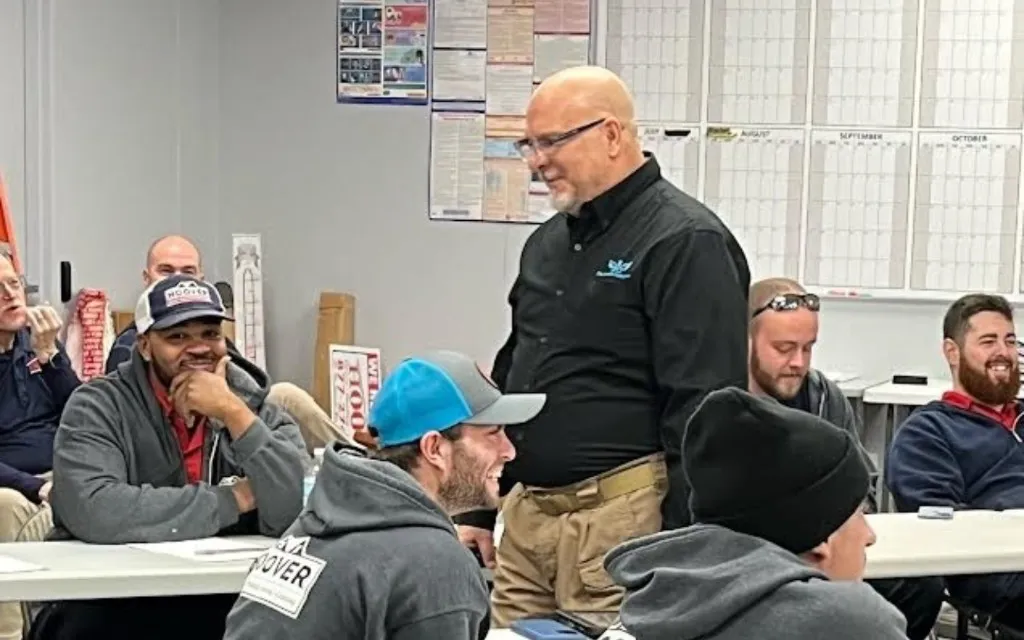
A home service business coach helps the owner of a plumbing, HVAC, or electrical shop run the company on a system. The coach reviews your numbers with you every week and trains your team for their roles. The coach helps you write down how the work gets done. Then the coach checks that you did what you said.
Most owners we coach started as technicians. They are good at the work. Nobody taught them how to run the business. That is the part we teach.
Our coaches have run plumbing, HVAC, and electrical companies themselves. Every coach is trained and certified in the system we teach.
The Service Operating System
We call the system SOS, the Service Operating System. It has five parts. Accountability is in the middle, because none of the five work without it.
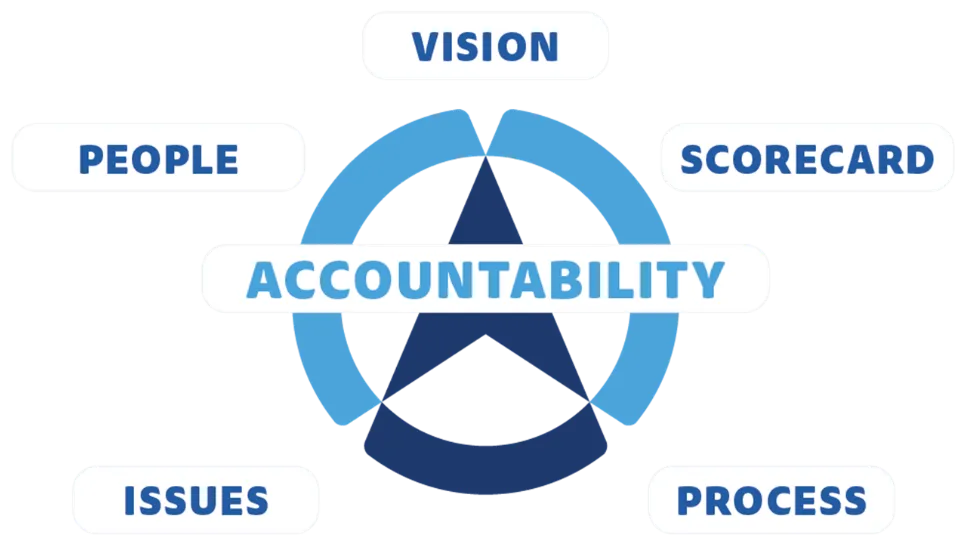
This is the part your coach works on most. Five habits keep the other parts working: a weekly meeting, 90-day goals, 90-day reviews, a yearly plan, and an org chart where one person owns each job. Accountability starts with clear communication. Support comes next. Consequences come last.
Part of SOS is already software. Your team can track tech and CSR numbers, take courses, and build a budget in the free SOS software. We are building the rest of the system into it. See what SOS includes.
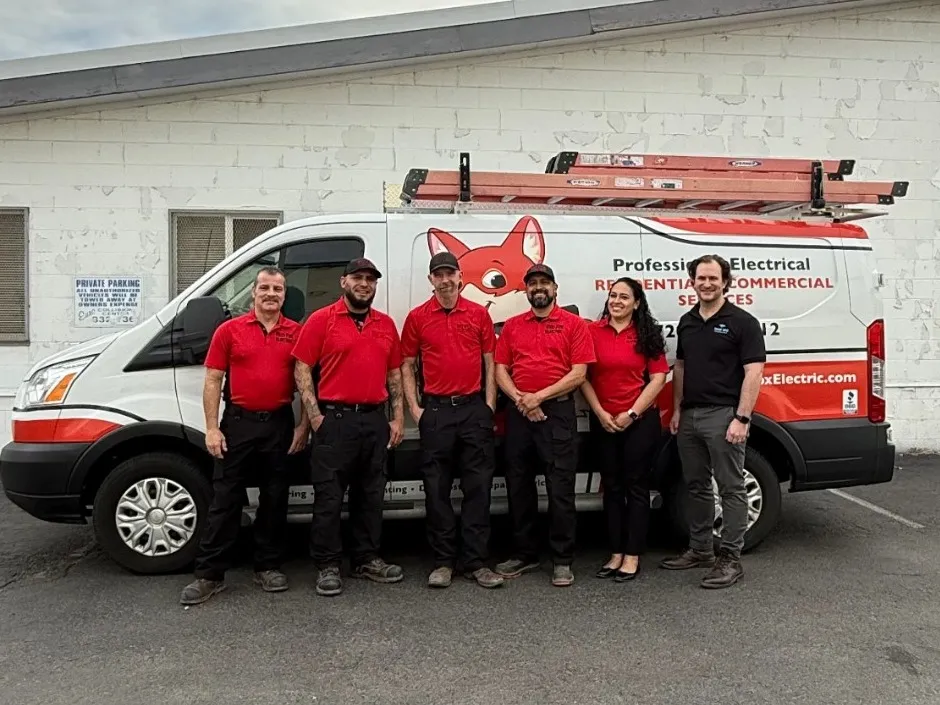
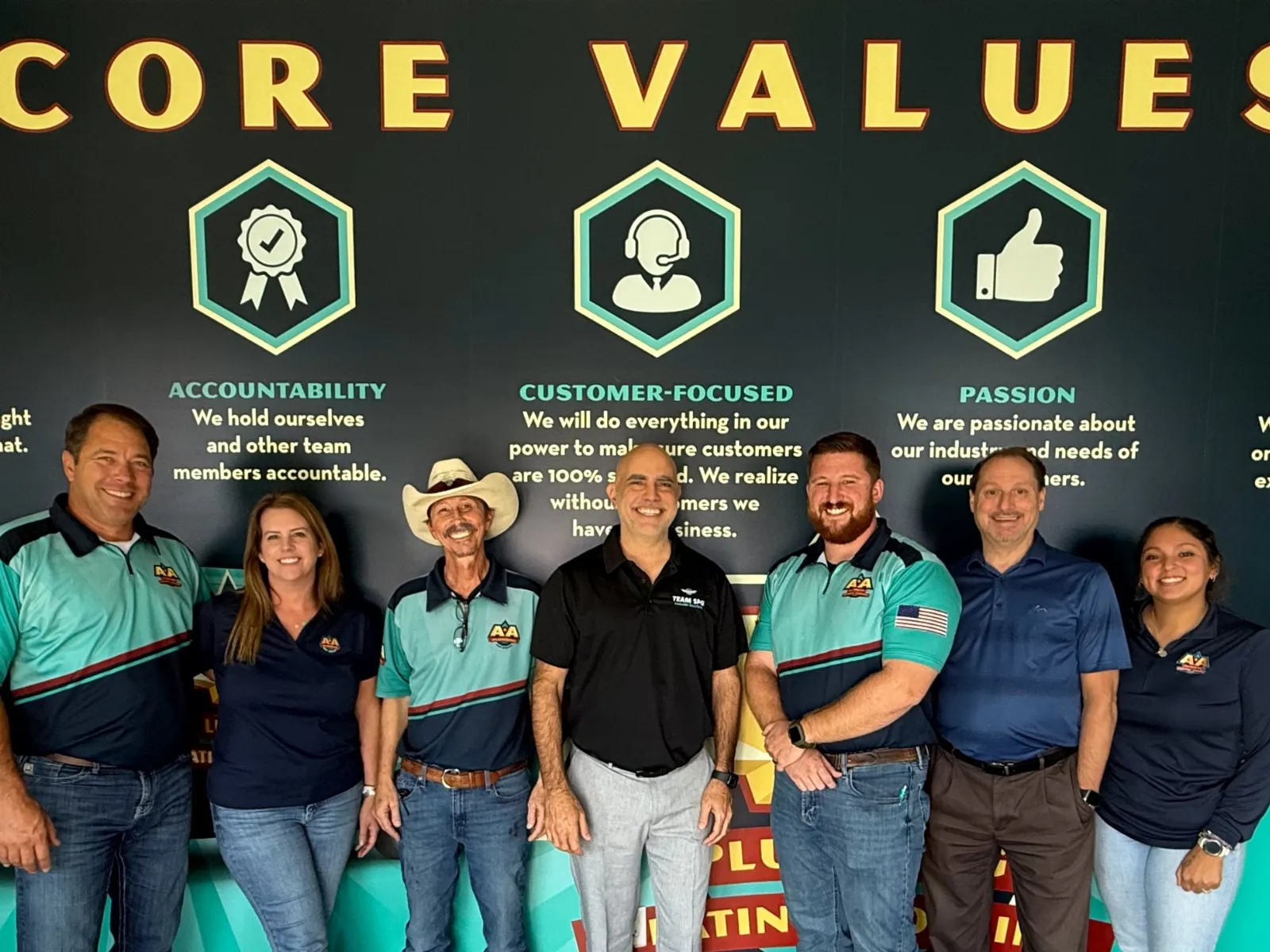
The Red Fox Electric team with their Team SPG coach.
“Not only has revenue increased but also our company culture and management's accountability.”
Every week
Your leadership team meets for 60 minutes every week. The meeting is on the same day and time each week, and it follows the same agenda. Your coach runs the first meetings. After a few weeks your team runs it, and your coach attends and gives feedback.
Two people have a job in every meeting. One keeps the meeting on time. One writes down the to-dos and the decisions.
Every role
You learn to read your budget, your billable hour rate, and your profit and loss. You build a company scorecard and run the weekly meeting. You set 90-day goals and a plan for the year.
Your service manager learns how to coach techs. That means ride-alongs, reviewing calls one at a time, and going over invoices with each tech. Your service manager also runs the daily huddle.
Techs learn PACE, our four steps for running a service call: prepare, arrive, connect, execute. They learn PLAN, our four steps for finishing a job so the customer does not have to call back. They learn to present options and offer maintenance plans.
CSRs (customer service reps) learn to book the call. We give them conversation guides, not scripts. They practice answering objections and following up on calls that did not book. Each CSR works from a daily checklist.
Dispatchers learn priority dispatching, which means sending the right tech to the right call. They set rules for job status updates, so the office hears about delays and added work when they happen.
Training is delivered five ways: live webinars for each role, courses in the SOS software, one-on-one sessions, on-site training at your shop, and live events.
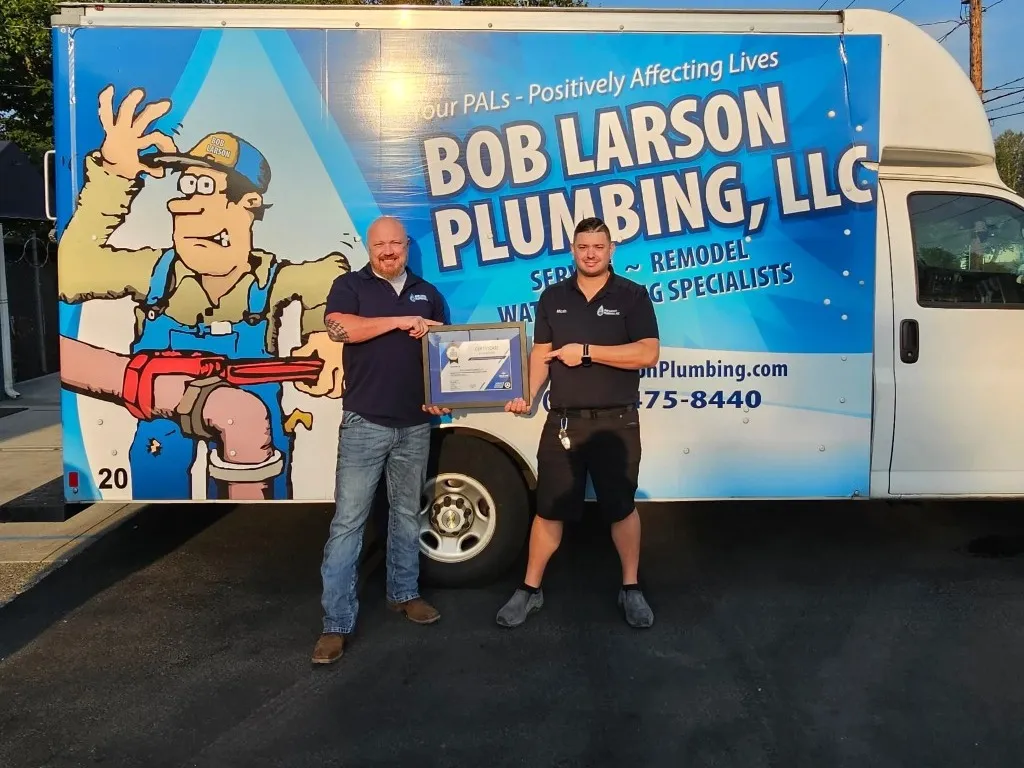
Robert Johnson, owner, and Micah Moore, general manager, of Bob Larson Plumbing with their certificate for completing SOS.
“As a manager with extensive experience as a technician, I've witnessed firsthand how their support has driven both my personal growth and the development of our team.”
“Also, don't forget the one-on-one coaching you gain access to. They're really there for you when you need them.”
What you build, in order
The five parts are the system. The Owner's Roadmap is the order you build them in. It has five phases, and each phase depends on the one before it.
Start with the service department. Check that your pricing covers your costs. Set up Key Training Indicators (KTIs) for your techs and CSRs. Train your techs on PACE.
Build a budget, a company scorecard, and a marketing plan. Set up performance pay for your techs. Write down how you recruit and onboard new hires. Start the weekly leadership meeting.
Write a procedure for every department. Put the procedures where your team can find them. Set a daily routine with a morning huddle and a tech debrief. Set rules for safety, trucks, and truck stock.
Write your mission, vision, and core values. Decide who owns each job in the company. Set 90-day goals and hold a review with each person every 90 days. Show each person the next job they can move up to.
Set your one-year, three-year, and ten-year plan. Decide whether to add service areas, service lines, or locations. Plan for the day you step back, pass the company down, or sell it.
Many business systems start with a vision statement. We start with the service department. Phase 1 raises revenue from the trucks you already run, and owners need that cash early.
We tell owners this: it does not matter why you run your business if you do not know how to run it. Once the numbers and the processes work, you write where the company is going.
“When we met SPG, Ken and I were ready to quit. We were done. They've helped us with processes and procedures and policies. We have more structure in our business.”
Getting started
A coach goes through your business with you. You leave with a short list of what to fix first.
An onboarding coach sets up your SOS account, adds your team, and sets KTI goals for each tech and CSR.
You join the weekly owner meeting. You pick one thing to do this week. Next week we check.
You meet with your coach one on one to work through your numbers and your plan.
You and your coach review your profit and loss and set the next 90-day plan.
Three ways to start
A 30-minute call about your shop. You talk through where the business is today and what is getting in the way. You leave knowing what to work on first. There is no cost and no obligation.
The Starter Toolkit is one of two first steps into coaching. It includes a business review call, KTI setup for your team, webinars, and one-on-one sessions.
Fast Track is a two-day workshop for owners who run three or more trucks. One ticket covers up to three attendees from your company. You leave with a 90-day plan for your shop.
Not ready for a coach? SOS is free software your whole team logs into. Create a free account and see your numbers this week. Create your free SOS account.
A coach helps you run your plumbing, HVAC, or electrical shop on a system. Your coach reviews your numbers with you every week and trains your team for their roles. Your coach also checks that you did what you said you would do.
It depends on the level of coaching you pick. We go over pricing on your free Strategy Session, after we learn about your shop and which level fits. There are no contracts at any level.
No. There are no contracts at any level. We earn your business every month.
Both. Owners get a weekly meeting and one-on-one sessions. Technicians, CSRs, dispatchers, and service managers get training built for their role.
No. Coaching and webinars happen over Zoom, so you can be anywhere in the United States or Canada. On-site training happens at your shop.
You will use it, and it is free. Your onboarding coach sets up your SOS account and adds your team. Your KTIs are tracked there, so you and your coach look at the same numbers.
Our coaches have run plumbing, HVAC, and electrical companies. The system is built for a shop with techs, CSRs, and a dispatcher. We train your team as well as you.
The Strategy Session is free. There are no contracts.