
Foundation
How many calls do I need to hit my plumbing revenue goal?
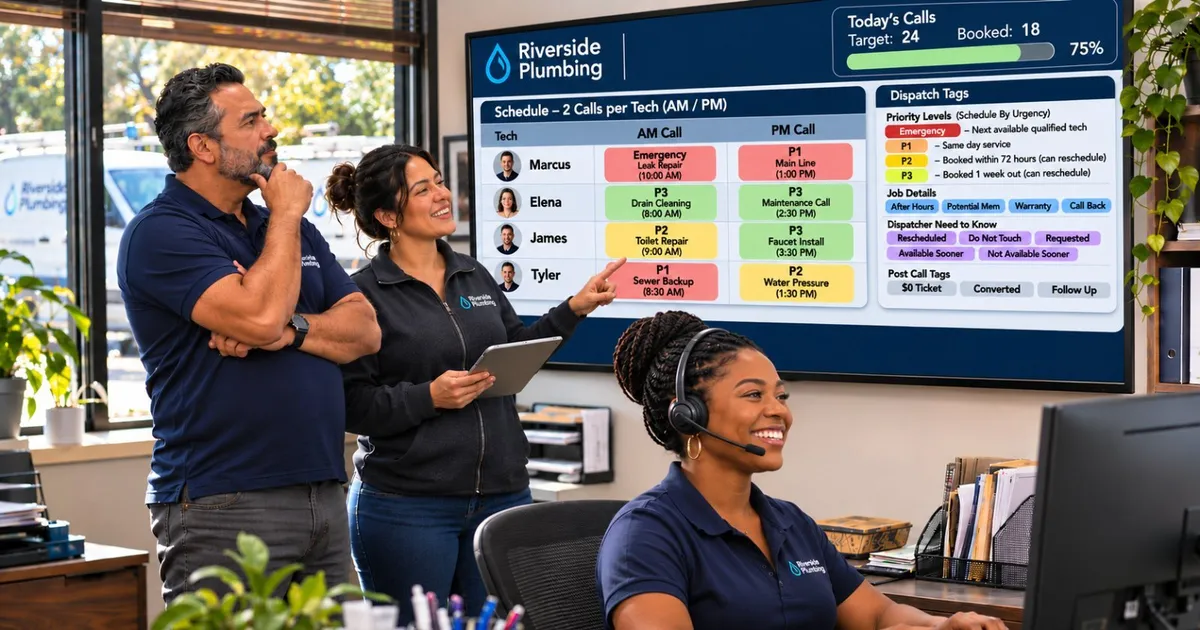
Start with a call cap your techs can serve well, not a number built to cover weak sales. Most strong shops run two to three calls a day per tech. Build a system so each tech sells more work per call, then use your revenue goal to set the ticket and close rate you need to hit it.
Cap your calls before you chase your revenue goal
Most shops try to hit a revenue goal by adding more calls. That gets expensive fast. More calls mean more marketing spend, more office work to book and follow up, and more drive time between jobs.
We recommend the opposite order. Cap the calls first, then build the system that sells more off each one. Fewer calls can produce the same revenue, or more, if your close rate and average ticket improve.
Why two calls a day is the right number
Most of the plumbing shops we coach see their best results running two to three calls a day per tech. The real target is higher than that. A tech who can run one call and sell a full day of work is the goal we train toward.
That is rare, but it keeps the system honest. You get two real chances most days to sell enough work to make the day pay. Run a tested system on those two calls and you will hit your numbers.
Chase extra calls instead of fixing the system, and you will spend the day trying to make up for calls that should have closed. That costs more in marketing, more in office time, and more in miles on the truck.
Capping calls has a payoff beyond cost. Techs spend less time driving and more time doing paid work. Customers get a tech who runs a consistent, proven process instead of a rushed one.
Build the plan, step by step
- Set your call cap. Decide how many calls each tech should run per day. Most shops land at two to three.
- Calculate yearly call capacity. Multiply calls per tech per day by techs running calls and work days per tech.
- Set the revenue goal from your budget. Include the cost of completing the work and the profit you plan to keep.
- Calculate the average ticket and close rate required. Divide the revenue goal by yearly call capacity, then adjust for close rate, to find what each call must produce.
- Train the system to hit that number. Do not raise the call cap to cover a gap in selling.
- Check the budget monthly. Compare planned revenue with actual revenue. Review average ticket and close rate separately to see what moved.
Use these formulas together:
| Number to find | Formula |
|---|---|
| Yearly call capacity | Calls per tech per day × techs × work days per tech |
| Jobs you can sell at your close rate | Yearly call capacity × close rate |
| Average ticket required | Revenue goal ÷ jobs you can sell |
| Close rate required | Revenue goal ÷ (average ticket × yearly call capacity) |
Use close rate as a decimal in the formulas. Keep your definitions the same across the budget and your field software.
Train performance, not call volume
At coached plumbing shops, the median close rate is 73.6%. The median average ticket is $1,213. Neither number is a promise about your shop. Use them as a check against your own numbers, not a target to copy.
Owners often budget for a close rate and average ticket higher than what their tech
73.6%
Plumbing close rate (median)
Team SPG coached-shop data · trailing 12 months ending Sep 2026 · updated Sep 2026
$1,213
Plumbing average ticket (median)
Team SPG coached-shop data · trailing 12 months ending Sep 2026 · updated Sep 2026

Related questions
How many calls per day should a plumber run?
Most plumbing shops we coach get their best results at two to three calls a day per tech. More calls than that usually means rushed calls and lower sales. Set the cap first, then train techs to sell more on each call.
What is a good average ticket for a plumbing company?
At coached plumbing shops, the median average ticket is $1,213. Use it as a check, not a target. The ticket you need comes from your own revenue goal, call cap, and close rate.
How do I build a yearly budget for a plumbing business?
Multiply calls per tech per day by techs and work days to find yearly call capacity. Set the revenue goal to cover the cost of the work plus the profit you plan to keep. Then find the average ticket and close rate you need, and compare plan to actual every month.
Does close rate change how many leads I need?
Yes. A lower close rate means you need more calls to sell the same number of jobs. Raising close rate usually costs less than buying more leads. Every added call costs you marketing, office time, and drive time.