
Operational Excellence
How do I write SOPs for my plumbing business?
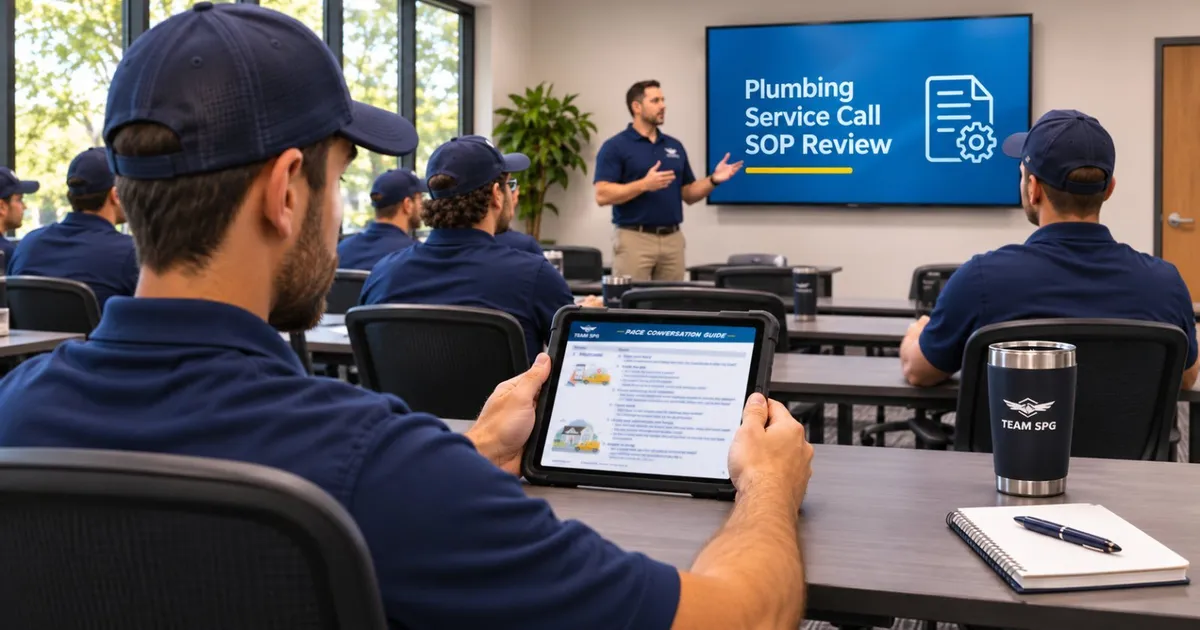
Start by listing each department’s key processes, using the EOS approach. Write SOPs for the revenue work first, based on your shop’s numbers. Keep each to a page, front and back. Watch your best person do the work, then test the written steps with someone newer before using them in training.
What plumbing business sops should cover
An SOP is a written set of steps for a key job in your shop. It says who does the work and what a finished job requires.
Use the EOS approach to identify the key processes across your business before writing individual SOPs. Do not document every small task as a separate process.
List your departments first:
- Marketing
- Finance
- Call center
- Dispatch
- HR
- Field service
For each department, choose the one or two functions that account for most of its daily work. Look at the system staff use to do that work.
For dispatch, that may be assigning and updating jobs in your dispatch software. For finance, it may be collecting payments and keeping accounts current.
Keep the company-wide list short enough to review together. At Team SPG, we recommend tying each process to a number you already track.
Which SOPs a plumbing company needs first
Start writing in the departments that generate revenue. Then use your own numbers to decide which process needs attention first.
Your shop’s numbers are not provided here. Pull your CSR KTI booking rate and technician KTI close rate before choosing.
If calls are not getting booked, review call booking first. If booked jobs are not selling, watch the service call before deciding what to write.
Check unpaid invoices when reviewing ticket closeout. Revenue on a ticket does not mean the shop has collected payment.
This is not a reason to ignore finance or HR. Include them in your process list, then set writing dates after reviewing revenue work.
How to write each SOP
Choose the process and its measure. Name the department and the person responsible. For call booking, use booking rate to check results.
Watch the person who does the job best. Write each step as they do it. Do not write what you think they do.
Write what to do and how to do it. Start each step with a verb, such as “Confirm the service address.” Include the software screen or form when needed.
Keep it to a page, front and back. Focus on the key job function and its common exceptions. Add why a step matters only when space allows.
Test it with someone newer. Have them complete the task from the page with minimal help. Revise any step that leaves them unsure.
Name an owner and add a date. That person keeps the SOP current when the process changes. Review the linked KTI after training to check whether results improve.
Short does not mean leaving out required safety instructions. Have a qualified professional review safety requirements before using the SOP for training.
What to put in a plumbing dispatch SOP
Keep dispatch instructions separate from call booking when different people own those jobs. Your dispatch SOP should explain how an accepted job gets assigned and updated.
Include these items:
- Required job details. State what dispatch needs from the CSR before assigning the call.
- Tech selection. Match the job to the tech’s skills and available truck stock.
- Customer updates. State who confirms the arrival window and sends delay notices.
- Schedule changes. Explain who approves changes when no suitable tech is available.
- Job status. Show when and how the dispatcher updates the dispatch software.
Test the SOP against a recent dispatch problem from your shop. Check whether following the written steps would have prevented it.
Track delays caused by missing job details or a poor tech match. Bring recurring problems to your coach with the affected tickets.
Documented is not the same as used
An SOP that nobody follows does not control how the job gets done. Check the written steps during training rather than assuming staff read them.
Use a huddle to review a step connected to a recent callback. During a ride-along, compare the tech’s work with the service call SOP.
When a step gets skipped, find out whether it was unclear or simply not followed. Fix unclear instructions before repeating the training.
Check callbacks and the linked KTI after making changes. Keep a change only if it helps staff follow the process or improves the result.
Where to keep your SOPs
Keep one current copy where everyone can open it on a phone. A shared folder or company portal can work.
Put the owner’s name and revision date on each SOP. During training, have the employee open that copy rather than use an old printout.
What we recommend this week
- List each department’s key processes. Choose the daily functions that most affect its results.
- Review the numbers for revenue work. Use your CSR KTIs and technician KTIs to choose the first SOP.
- Write and test that SOP. Assign its owner and schedule a check of the related metric with your coach.

Related questions
What SOPs does a plumbing company need?
Document the key processes in each department, not every small task. Write the revenue processes first, using your shop’s numbers to set the order.
How long should an SOP be?
Aim for a page, front and back. Test whether someone newer can follow it with minimal help before calling it finished.
How do I get my techs to actually follow SOPs?
Check their work against the SOP during ride-alongs. Review missed steps with the tech, then check the related KTI or callback record.
Where should I store company SOPs?
Keep one current copy in a shared location everyone can open from a phone. Have new hires find it during training so you know they have access.